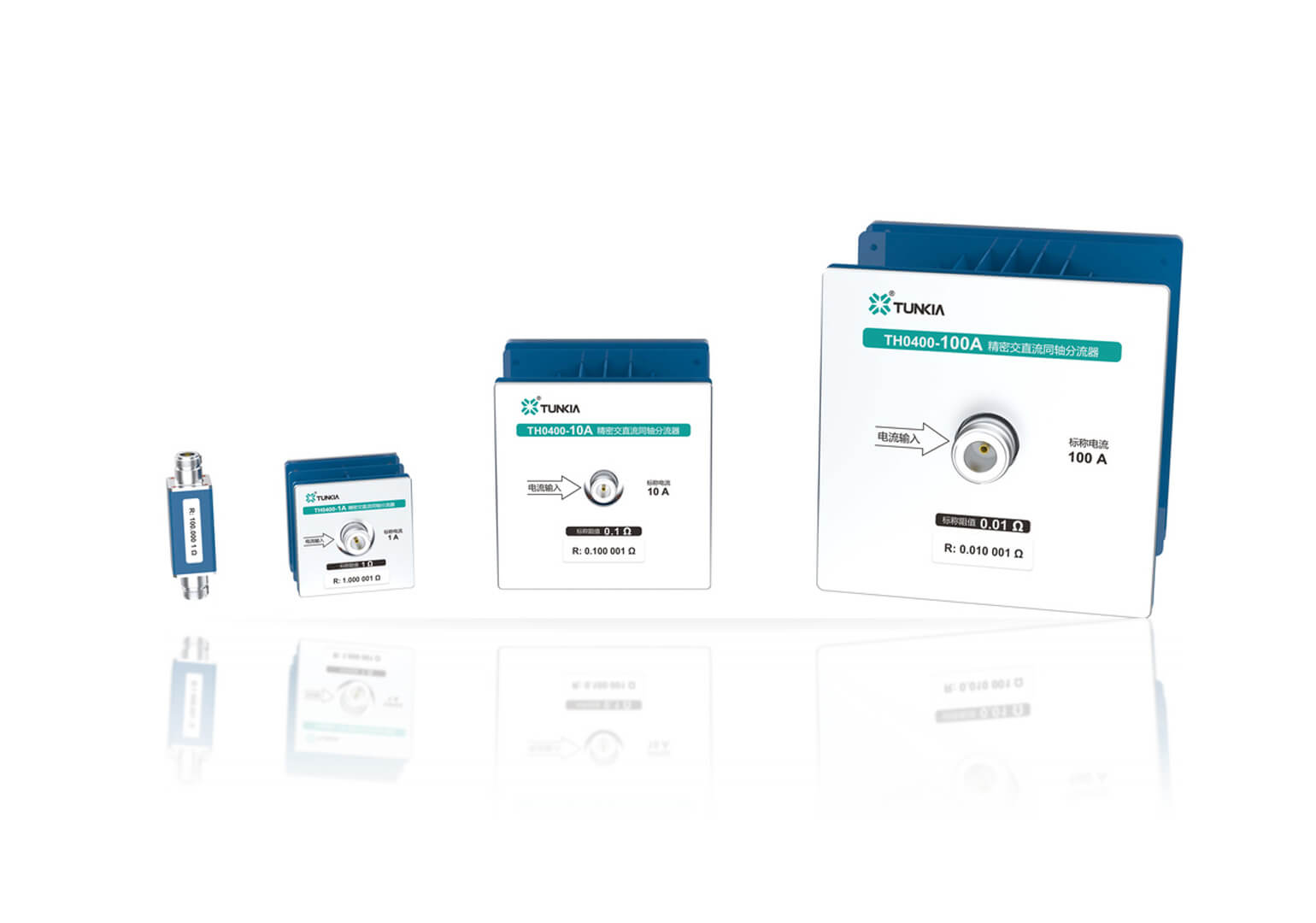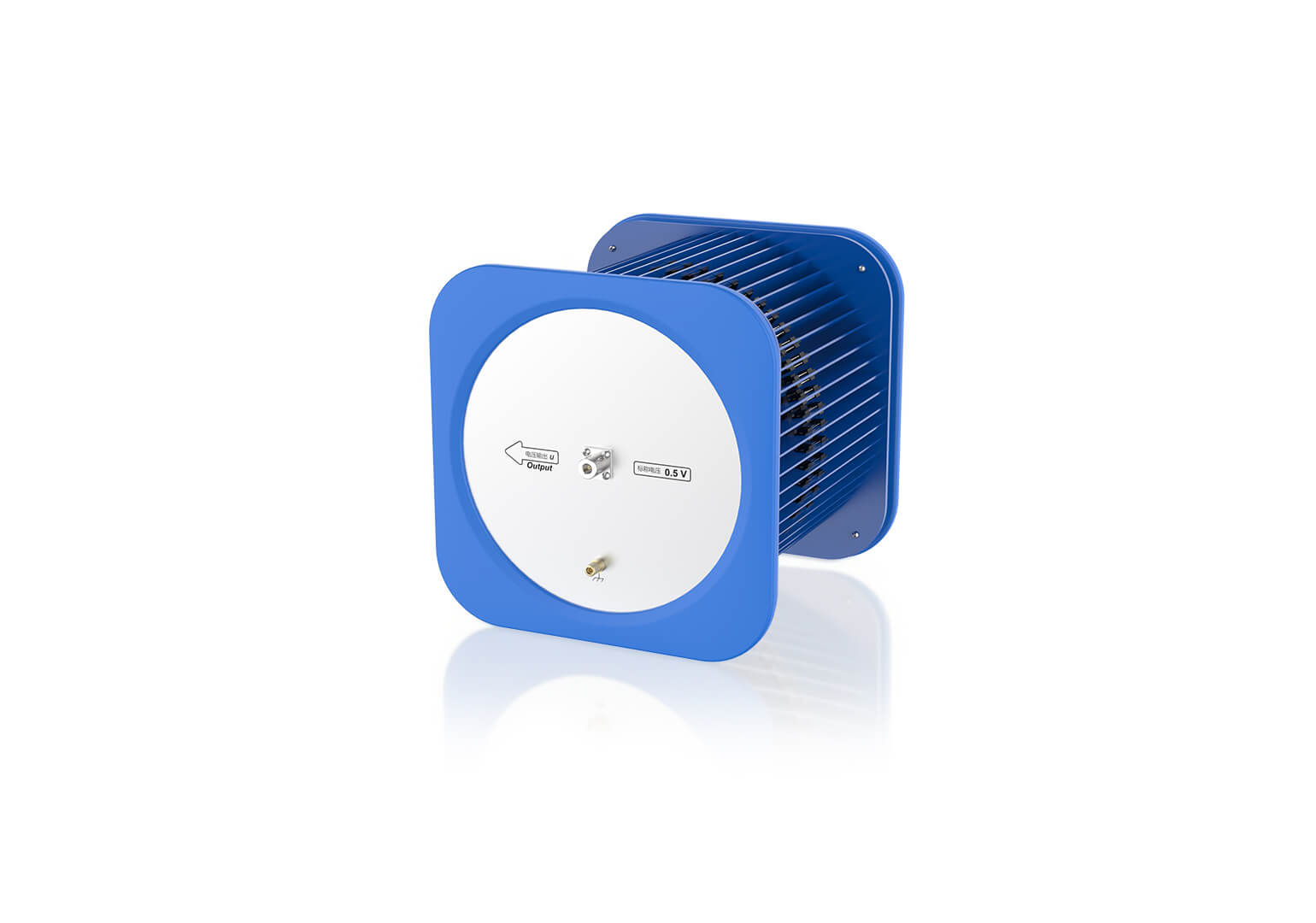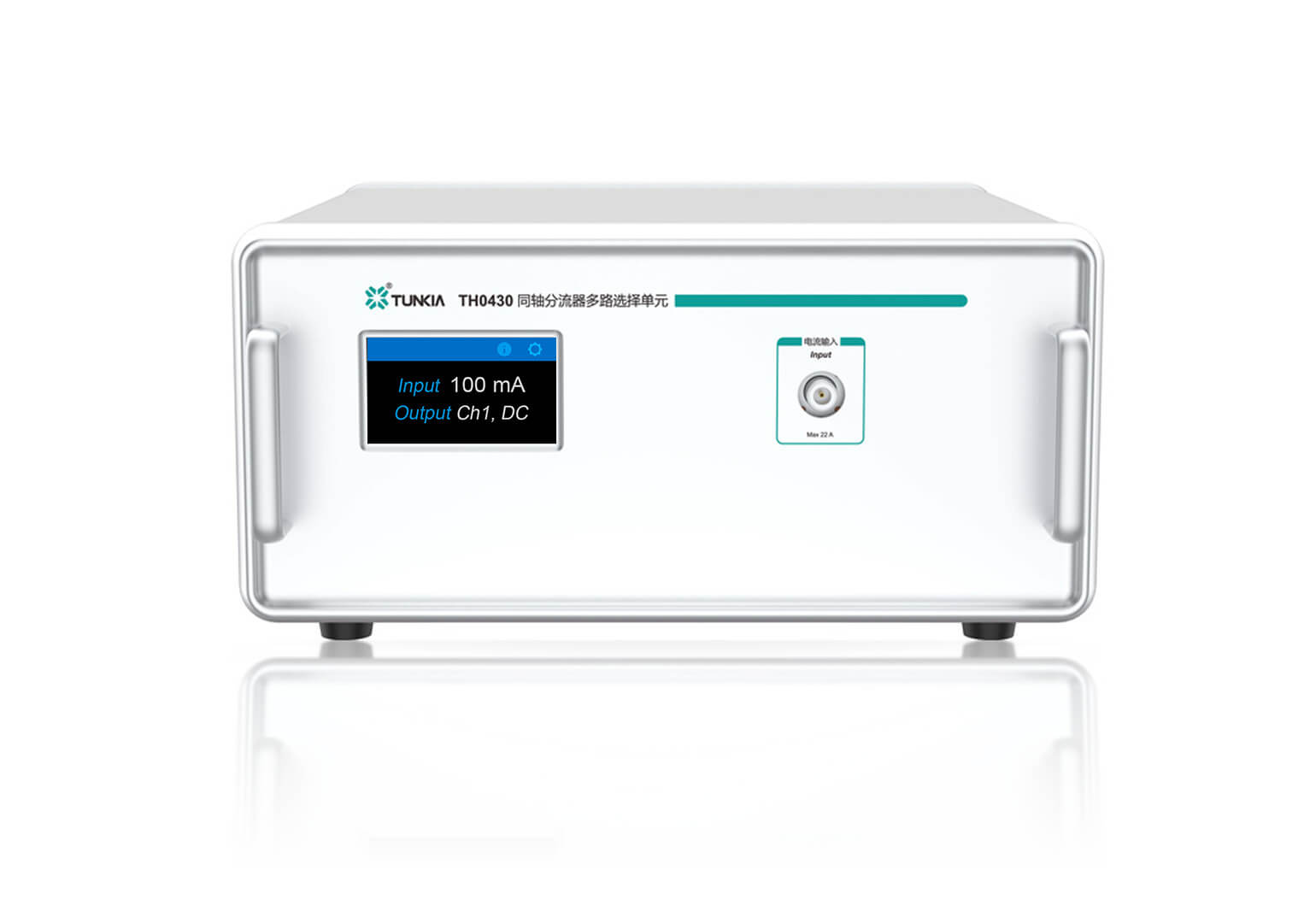
工作频率:DC ~ 1 MHz
交直流差:≤ 20 ppm @53Hz
最佳相位移:5 μrad
标称输出电压为1 V(可定制其他电压值)。
典型年变化典型值为5 ppm,最大值为18 ppm。
具有承受瞬间电流冲击的能力。
具有较大的电流承载能力。
具有极低的温度系数、功率系数,良好的散热结构。
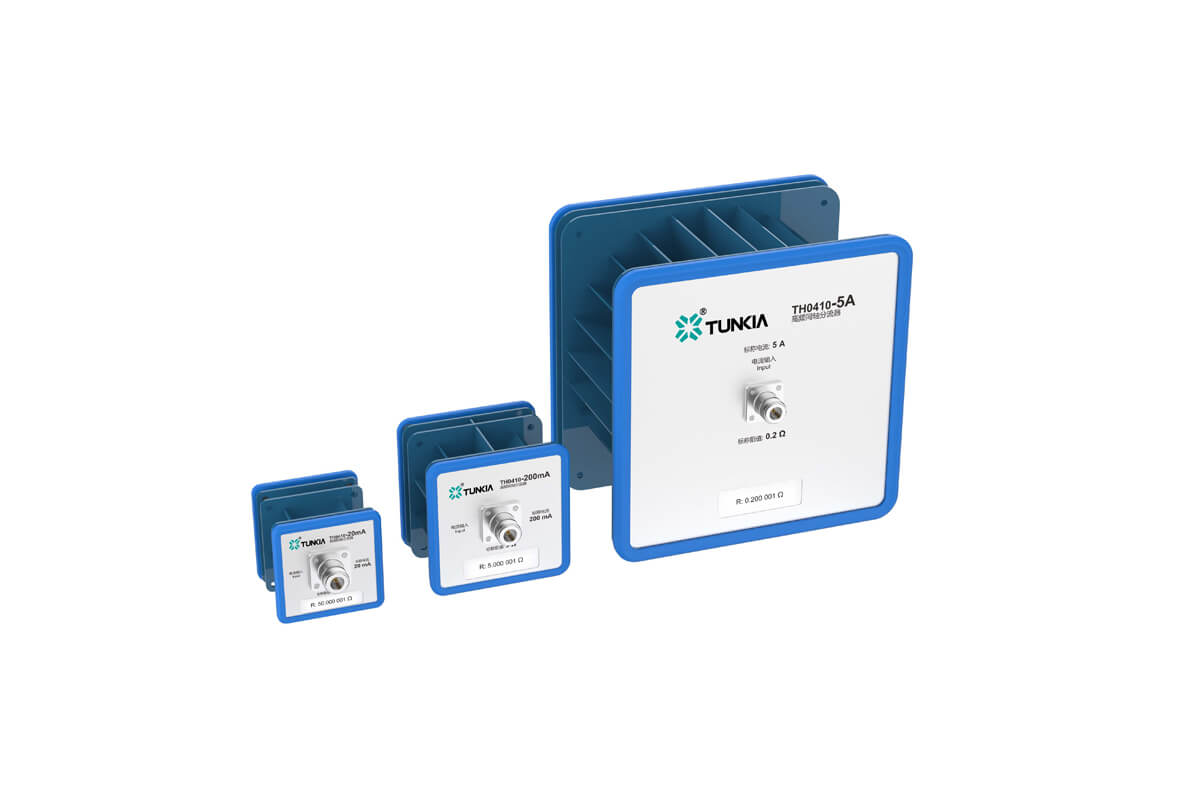
TH0410
高频同轴分流器
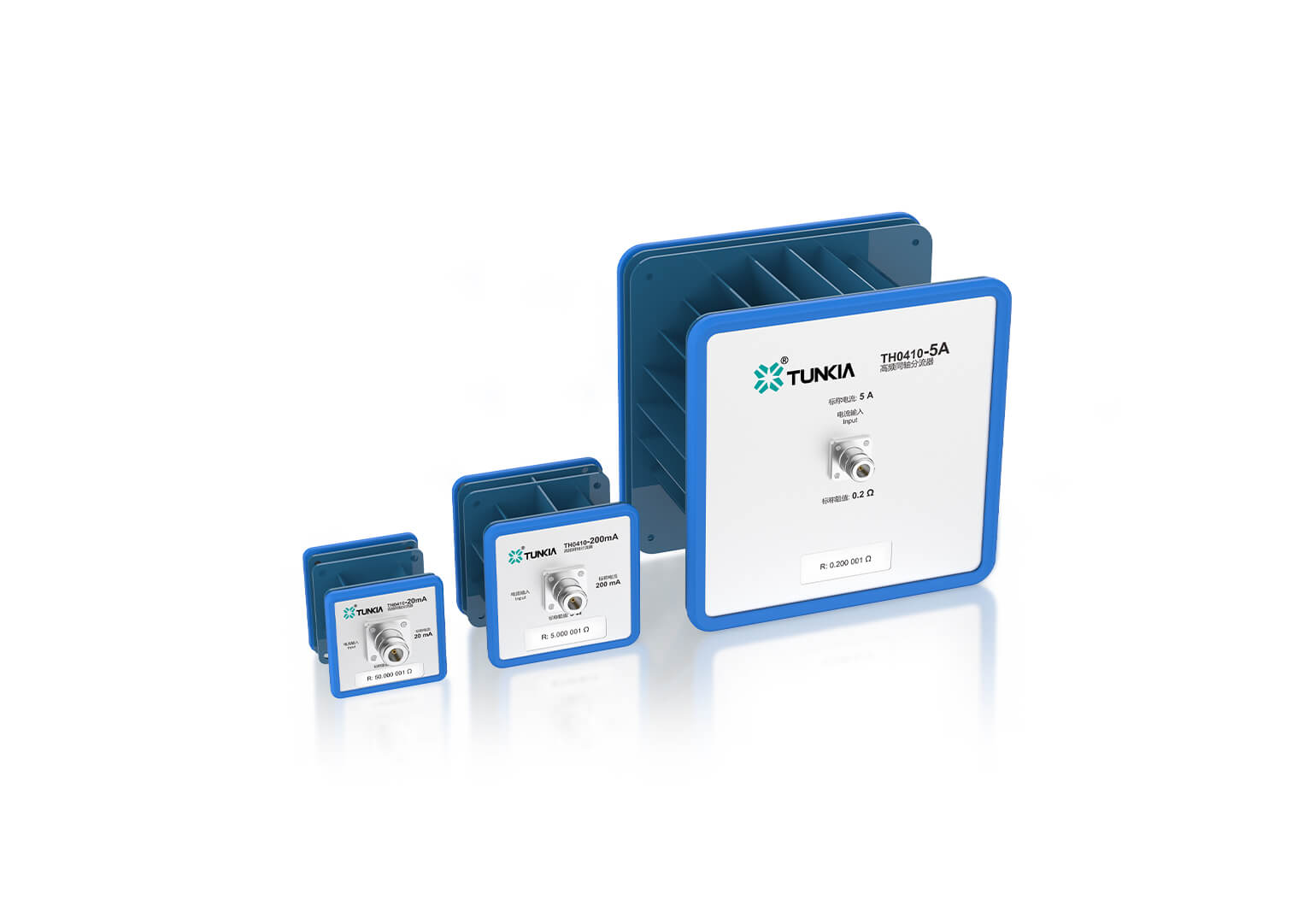
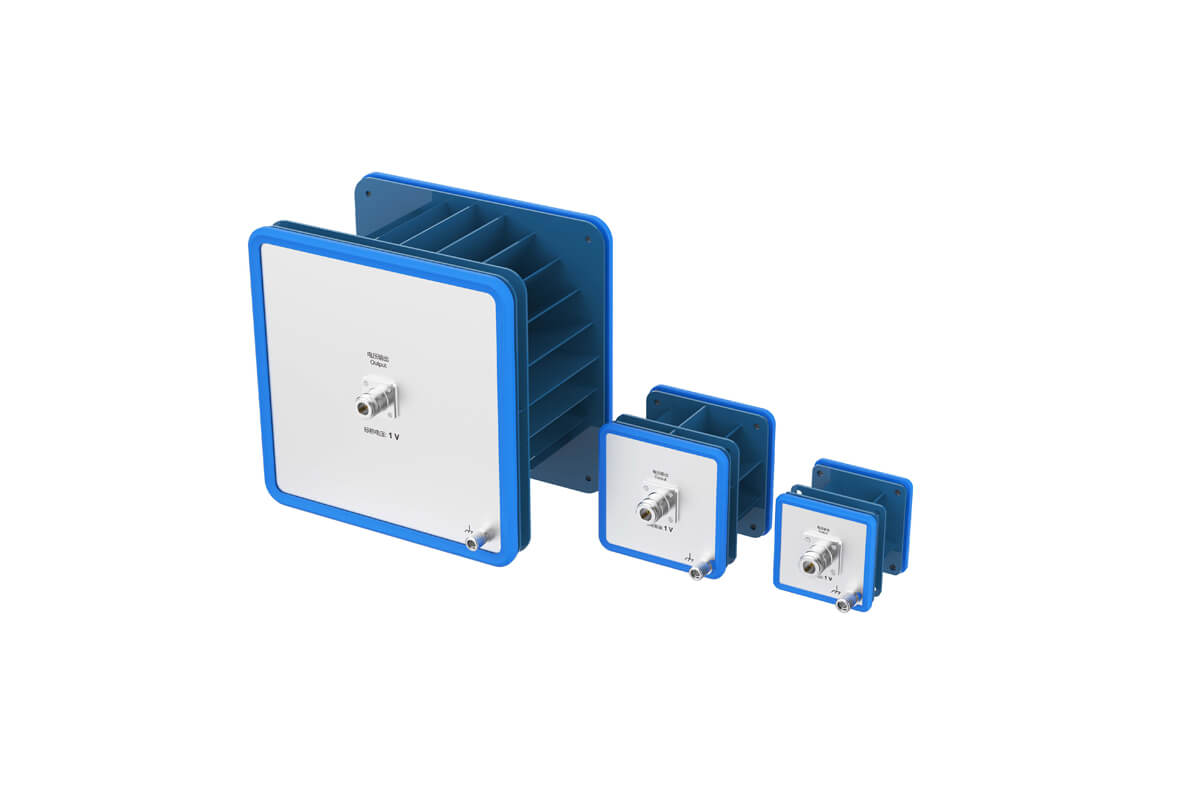
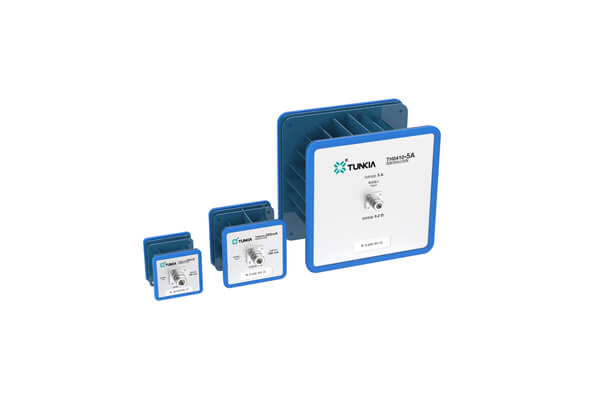
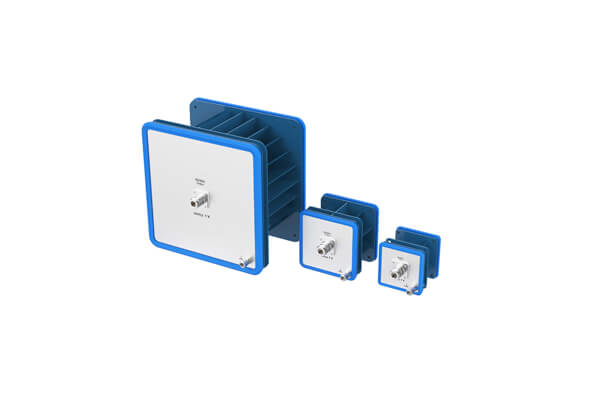
TH0410是一款适用于高频电流转换测量的设备,可将DC ~ 1MHz的宽频电流转换为小电压,便于接入电压高速采样系统或高精度数表,解决1MHz高频条件下复杂波形的电流测量难题;
该设备具有优异的频响带宽及测量准确度,非常适用于测评高频电流源/高频跨导放大器、电流传感器的准确性及频响特性。
产品特征
技术指标
供电电源 | —— |
温度性能 | 工作温度:13°C~33°C; 校准温度:18°C~28°C; 储存温度:5°C~45°C 注:当存储在恶劣的温度环境下,可能会导致电阻值临时变化并在随后的30天内恢复至原有阻值。 |
湿度性能 | 工作湿度:< 50% R·H 储存湿度:(15%~80%) R·H,不结露 |
连接方式 | 输入连接:采用Type-N型母插头; 输出连接:采用Type-N型母插头。 |
规格型号 | 尺寸( mm ) ( W * D * H ) ( 不含接线端子 ) | 质量 ( kg ) | 尺寸图 |
TH0410-20mA TH0410-50mA TH0410-100mA | 65 × 68 × 68 | 0.1 | 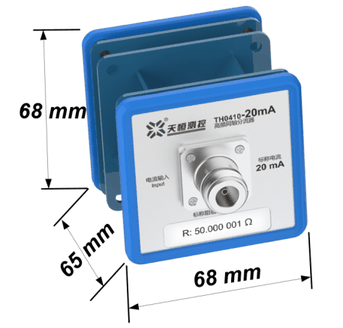 |
TH0410-200mA TH0410-500mA TH0410-1A TH0410-2A | 82 × 94 × 94 | 0.2 | 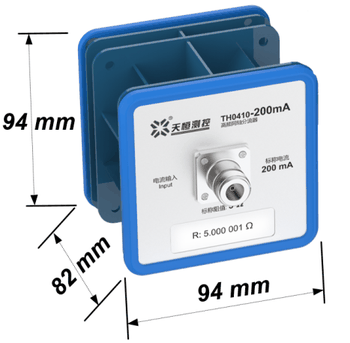 |
TH0410-5A TH0410-10A | 154 × 205 × 205 | 1 | 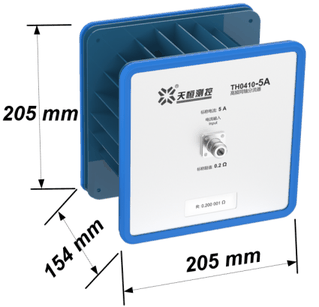 |
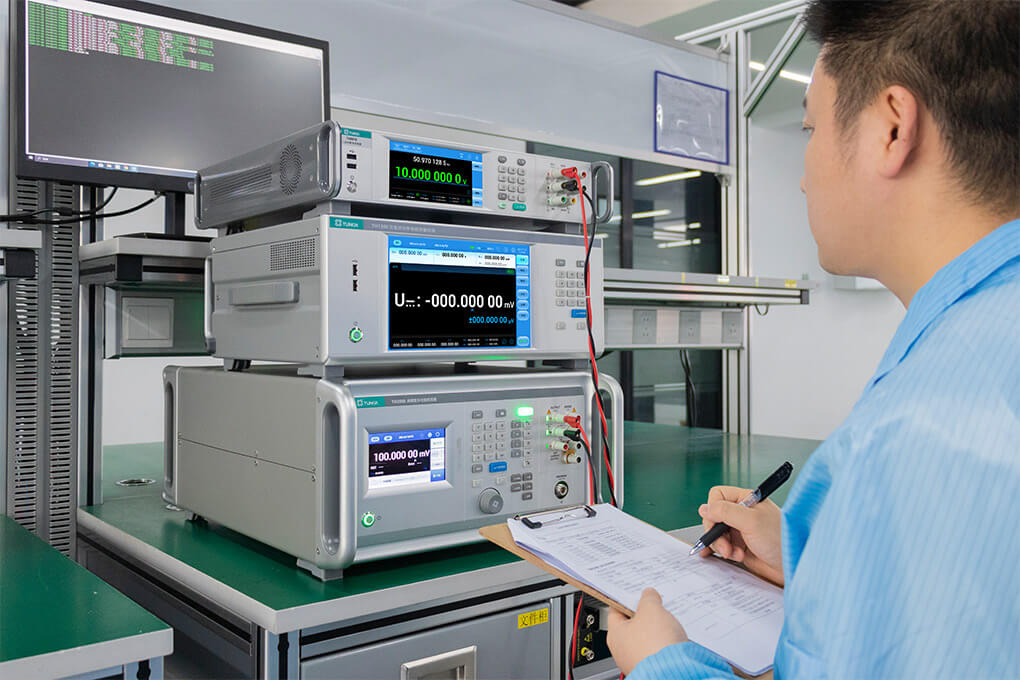
应用方案
订购信息
| 选型指南 | |
|---|---|
型号 | 一次标称电流 |
TH0410-20mA | 20 mA |
TH0410-50mA | 50 mA |
TH0410-100mA | 100 mA |
TH0410-200mA | 200 mA |
TH0410-500mA | 500 mA |
TH0410-1A | 1 A |
TH0410-2A | 2 A |
TH0410-5A | 5 A |
TH0410-10A | 10 A |
| 选配件清单 | ||
|---|---|---|
图片 | 规格 | 功能 |
 | N公型-接线端子 | 一次电流输入 |
 | N公型-BNC母型 | 二次电压输出 |
 | BNC公型-BNC公型 | |
 | 1MHz,N公头输入-N母头输出 | 将高内阻信号转换为低阻输出 |
 | 便携储运箱 | 包装运输 |
*备注:选配件需单独购买,详细配件技术规格请参考产品文档
相关资源
常见问题
采用同轴分流器测量交直流电流时误差如何计算?
1. 测量直流电流
以TH0400-10A为例,其电阻技术规格如下:
| 标称电流 | 标称阻值 | 直流阻值初始偏差[1] (±μΩ/Ω) @ (23±1)°C | 年稳定性 (±μΩ/Ω) | 温度系数 (±ppm/K) | 功率系数[2] (±μΩ/Ω) |
10 A | 0.1 Ω | 50 | 18 | 4.0 | 60 |
(1)同轴分流器的直流阻值初始偏差为直流条件下的阻值的最大偏移量,通常为制造商出厂的担保值;同轴分流器可通过送检上级计量部门,或使用精密电阻测量系统测量其阻值,获得已校准的阻值。
(2)在使用同轴分流器测量DCI时,在不同输入电流下由于电阻自身的发热导致阻值的变化,从而引入误差,误差的变化区间如图1所示。
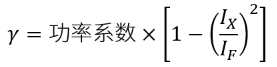
不同输入电流下的最大误差可通过以下公式计算:
式中:
γ—不同输入电流下的最大误差,单位:ppm
功率系数—TH0400-10A的功率系数为± 60 ppm;
IX—输入电流值;
IF—标称电流值,为10 A;
(3)则在不同输入电流下,同轴分流器的阻值:

(4)则电流的测量值为:

式中:
U—电压测量值,单位为V。
| 标称电流值 | 测量电流值 | γ |
|---|---|---|
10 A | 10 A | 0 |
10 A | 9 A | ± 11.4 ppm |
10 A | 8 A | ± 21.6 ppm |
10 A | 7 A | ± 30.6 ppm |
10 A | 6 A | ± 38.4 ppm |
10 A | 5 A | ± 45.0 ppm |
10 A | 4 A | ± 50.4 ppm |
10 A | 3 A | ± 54.6 ppm |
10 A | 2 A | ± 57.6 ppm |
10 A | 1 A | ± 59.4 ppm |
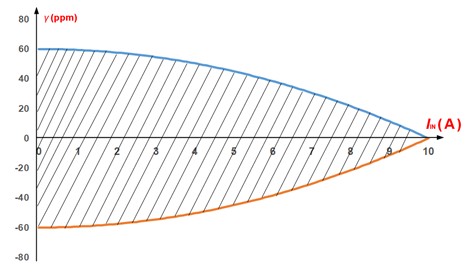
图1 不同输入电流下的误差变化区间
2. 测量交流电流
在测量ACI条件下,会引入交直流差,则应对测量电流值按下公式计算:

式中:
U—电压表的测量值,单位为V;
R—同轴分流器的阻值,根据公式(3)计算;
AC-DC—交直流差,50 Hz下为20 ppm

浅谈同轴分流器之电阻功率系数
一、 什么是电阻功率系数
电阻功率系数(Power Coefficient of Resistance,PCR):电阻每改变单位功率时,阻值的相对变化量。功率系数和温度系数(Temperature Coefficient of Resistance,TCR)均反应了温度对电阻阻值的影响,不同的是,功率系数为电阻施加功率后,由于自热引起的阻值相对变化,而温度系数为环境温度通过热传导引起阻值漂移的变化率。
二、 功率系数对同轴分流器工作有什么影响
同轴分流器由于其优异的交直流差和相位移性能,使其广泛应用于计量实验室校准宽频电流源,包括带功率功能的设备如F厂商的61系列。但在实际应用中,计量人员经常会遇到以下几个问题:
1)校准时需往同轴分流器加载电流并达到热平衡后才可开始测量,而单次测量的典型热平衡时间在10分钟左右,通常的宽频功率源具有多个电流量程,因此完成整个设备的校准是一件非常费时的工作。
2)同一个分流器在加载不同电流时,由于发热量不一致,导致阻值发生变化,会引入由功率系数导致的不确定度分量。对于精度要求较高的应用场合,需要更换不同规格的分流器且对数据进行修正,会导致校准效率进一步下降。
三、 超低功率系数的同轴分流器对校准的优化
天恒测控深度分析同轴分流器使用中存在的上述问题,通过优化散热结构、选取超低温度系数的电阻元件、增加电阻数量等手段,研制了具有超低功率系数的TH0420参考级同轴分流器,并与原有的TH0400同轴分流器(与国际一线产品全面对标)进行了比对测试:在二种分流器上分别施加100A的标称直流电流,测量二者阻值随时间的变化,并绘制了同轴分流器阻值时漂曲线。如图1所示:
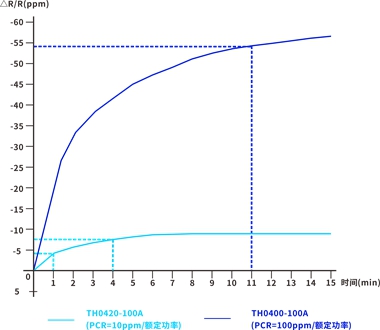
图1 典型同轴分流器施加电流后的阻值时漂曲线
1)初步结论
TH0420在1min时其电阻相对变化值优于5ppm,达到热平衡后的电阻相对变化也仅为8ppm,是TH0400的1/7。
TH0420测量建立时间仅需4min,而TH0400需至少11min。由此可见:功率系数越低的同轴分流器,测量建立时间(热平衡时间)越短,性能越优。
2)理论分析
功率系数越低,额外引入的测量不确定度越小,测量结果越准确。实际工作中,电阻因自热将引起阻值变化,并引入额外的测量不确定度δP,计算如下式所示:
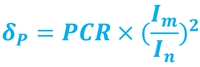
注:Im为工作电流,In为标称电流
以标称电流In均为100 A的TH0400和TH0420为例,分别计算工作电流Im为90 A和60A时额外引入的测量不确定度δP,结果如表1所示:
| 表1 典型同轴分流器在不同工作电流下引入的测量不确定度δP | ||
|---|---|---|
| 同轴分流器型号 | 不同工作电流下引入的测量不确定度δP | |
| 90A | 60A | |
| TH0400(PCR=100ppm/额定功率) | 81ppm | 36ppm |
| TH0420(PCR=10ppm/额定功率) | 8.1ppm | 3.6ppm |
由表可知:
1)工作电流Im越大,产生的自热量越大,δP越大;
2)功率系数越低,δP越小,对测量结果干扰越小。实际工作中,应尽量选取低功率系数的同轴分流器。
电阻测量相关术语一览表
| 术语(CN) | 术语(EN) | 标准来源 | 定义 |
|---|---|---|---|
| 精密电阻 | precision resistor | IEC 60115-1 | resistor that is specified with a tighter tolerance on its nominal resistance and/or a lower temperature coefficient of resistance compared to typical standard tolerance and TCR of resistors made with the same product technology, and which in its prescribed testing meets tighter stability requirements than what is usually met by resistor made with the same product technology. |
| 相较于采用同种制造工艺的常规电阻器,标称阻值初始偏差更严苛、和/或电阻温度系数更小,且在规定试验中,稳定性指标也高于同工艺常规产品要求的电阻器。(例:初始偏差1%的线绕功率电阻;电阻温度系数25×10-6/K、公差1%的小功率膜式电阻;阻值小于10 mΩ、电阻温度系数50×10-6/K、公差1%的金属箔电阻) | |||
| 低值电阻 | low resistance | IEC 60115-1 | resistance for which the predictable error when measured with a conventional two-wire sensing method is significant in comparison to the required precision or to the stated tolerance |
| IEC 62812 | 采用常规两线测量法测量时,可预见的测量误差相较于要求测量精度或标称初始偏差而言不可忽略的电阻 | ||
| 低功率电阻 | low-power resistor | IEC 60115-1 | resistor that, when loaded with its rated dissipation at the rated temperature, without any accessory supporting dissipation and subjected to natural convection only, maintains a maximum element temperature of 200 ℃ or less. |
| 在额定温度下施加额定功耗,无任何附加辅助散热装置、仅依靠自然对流散热时,元器件最高温度不超过200 ℃的电阻。(额定功耗通常不大于3 W;适用温度范围的限制规定,可使环境试验完整覆盖全部适用温度区间) | |||
| 标称阻值Rn | nominal resistance | IEC 60115-1 | designated resistance value, usually indicated on the resistor. |
| GB/T 5729 | 电阻器设计所确定的、通常在电阻器上标出的阻值。(英文使用rated resistance) | ||
| 额定阻值Rr | rated resistance | IEC 60115-1 | resistance value for which the resistor has been designed, and which is generally used for the denomination of the resistor. |
| (The definition of rated resistance is identical to the definition of nominal resistance. Therefore, the nominal resistance can be applied in all cases where a rated resistance is called for) | |||
| 电阻器设计时的电阻值,一般也用作该电阻器的标称规格(额定阻值在定义上与标称阻值完全一致,因此在所有需要采用额定阻值的常昊,均可使用标称阻值替代) | |||
| 初始偏差ΔRn | tolerance/tolerance on nominal resistance | IEC 60115-1 | permissible relative deviation of the actual resistance R at 20 ℃ from the nominal resistance Rn at 20 ℃ at the moment of delivery from the manufacturer. |
| (Tolerance on nominal resistance does not account for any change of resistance occurring after delivery form the manufacturer and particularly does not describe any budget for changes the resistor naturally will accumulate under the influence of electrical, environmental and other stresses experienced in its application) | |||
| 制造商交付时,在20 ℃温度条件下,电阻实际阻值 R 相对于20 ℃下标称阻值 Rn 允许的相对偏差 | |||
| (初始偏差不包含交付后产生的任何阻值变化,尤其不能用来衡量电阻在使用过程中受电应力、环境应力及其他应力1作用而逐步累积的阻值变动余量) | |||
| 电阻温度系数α | temperature coefficient of resistance (TCR) | IEC 60115-1 | reversible relative variation of resistance between two given temperatures divided by the difference in the temperature producing it. |
| (The TCR is usually determined between the reference temperature and the LCT/UCT, respectively, for which the larger of the two determined coefficients is expressed as the result. TCR通常分别在基准温度与类别上下限温度之间测定,取两个测定系数中数值更大者作为最终结果) | |||
| GB/T 5729 | 两个规定温度之间的阻值相对变化除以产生这个变化的温度之差。(缺少对于可逆的描述) | ||
| 类别温度范围 | category temperature range | IEC 60115-1 | range of ambient temperatures, for which the resistor has been designed to operate continuously, given by the lower and upper category temperature. |
| upper category temperature (UCT): maximum ambient temperature at which a resistor has been designed to operate continuously at the portion of the rated dissipation indicated in the category dissipation. | |||
| lower category temperature (LCT): minimum ambient temperature at which a resistor has been designed to operate continuously. | |||
| GB/T 5729 | 电阻器设计所确定的能够连续工作的环境温度范围,该范围取决于它的相应类别的温度极限值。 | ||
| 上限类别温度(UCT):电阻器设计所确定的、用类别功耗标出的那部分额定功耗下能够连续工作的最高环境温度。 | |||
| 下限类别温度(LCT):电阻器设计所确定的能够连续工作的最低环境温度。 | |||
| 温升Δθ | temperature rise | IEC 60115-1 | 电阻施加功耗后,其表面或内部产生的温度升高量;温升大小由电阻自身热特性决定,也就是电阻向环境散出损耗热量的能力。 |
| 功率系数 | power coefficient of resistance (PCR) | 暂无标准定义 | the relative change in resistance when the resistor changes unit power. |
| 电阻在改变单位功率时,阻值的相对变化量。 | |||
| 热电势 | thermoelectric e.m.f | IEC 62812 | potential difference occurring at the junctions of dissimilar conductors when a temperature difference exists between the junctions. |
| 当异种导体的两处接点之间存在温差时,在接点处产生的电位差。 | |||
| 额定功耗Pr | rated dissipation | IEC 60115-1 | maximum permissible dissipation at a rated temperature under the conditions of an endurance test and of the respective acceptance criteria. |
| GB/T 5729 | 在70 ℃环境温度下进行70 ℃耐久性试验,而且阻值变化不超过该试验的允许值时所允许的最大功耗。 | ||
| 类别功耗 | category dissipation | IEC 60115-1 | fraction of the rated dissipation exactly defined by the relevant specification, applicable at the UCT, taking into account the derating curve prescribed by the relevant specification. |
| GB/T 5729 | 考虑到详细规范规定的降功耗曲线,由详细规范明确规定的在上限类别温度下施加的那一小部分额定功耗。 | ||
| 功率降额曲线 | derating curve | IEC 60115-1 | curve that shows the maximum allowable dissipation at ambient temperatures between the UCT and the LCT. |
| 表征在类别上限温度与类别下限温度之间各环境温度下,电阻器最大允许功耗的曲线。(在LCT至额定温度区间内,曲线对应额定功耗;在额定温度至元件最高温度MET区间内,曲线先行下降,至MET处功耗降为0,该下降斜率由电阻器热特性即向环境散热的能力决定) | |||
| 长期寿命 | endurance (load life) | IEC 60115-1 (无定义,仅作为测试项目) | 测试在规定温度下(70 ℃或室温),长期循环施加特定电压后,电阻器仍能保证正常工作且阻值稳定的能力。 |
| 短时过载 | short-term overload | IEC 60115-1 (无定义,仅作为测试项目) | 考核电阻承受单次短时过载的耐受能力。 |
| 上升时间(电感) | rise time(inductive time constant τL) | IEC 60115-1 (无定义,仅作为测试项目) | 施加脉冲电压时,电阻上的电压达到最大电压一定程度所需的时间。 |
| (根据IEC 60115-1中的测试方法,需要测量通过测试系统读出的电压达到最大电压63.2%时的时间) | |||
| (仅适用于低电感电阻) | |||
| 电流噪声 | current-noise | IEC 60195 | combination of all random fluctuations of current flow in a resistor which are not attributed to thermal agitation of the charge carriers (thermal noise) and which depend on the applied direct current. |
| 电阻中所有电流随机波动的组合,这些波动不源于载流子的热运动(热噪声)且与施加的直流电流有关。 |